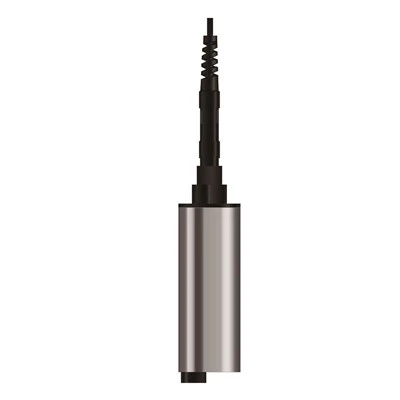
How does an oil in water sensor work in water with high organic content?
As a provider of oil in water sensors, I often get asked about how our sensors perform in water with high organic content. It's a crucial question, as many industrial and environmental settings deal with water that contains a significant amount of organic matter. In this blog post, I'll delve into the working principles of our oil in water sensors and explain how they handle water with high organic content.
Understanding the Basics of Oil in Water Sensors
Before we discuss how our sensors work in high - organic - content water, let's first understand the basic principles of oil in water sensors. These sensors are designed to detect and measure the concentration of oil in water. There are several methods used for this purpose, including fluorescence, infrared absorption, and turbidity measurement.
Our sensors primarily use the fluorescence method. Fluorescent compounds in oil molecules absorb light at a specific wavelength and then emit light at a longer wavelength. The sensor emits a light beam at the appropriate excitation wavelength, and then measures the intensity of the emitted fluorescent light. The intensity of the fluorescent light is directly proportional to the concentration of oil in the water.
Challenges Posed by High Organic Content
Water with high organic content presents several challenges for oil in water sensors. Organic matter can interfere with the measurement in multiple ways. Firstly, some organic compounds may also fluoresce under the same excitation wavelength as the oil. This can lead to false positive readings, as the sensor may mistake the fluorescence from the organic matter for that of the oil.
Secondly, high organic content can cause changes in the optical properties of the water. For example, it can increase the turbidity of the water, which means that the light beam from the sensor may be scattered or absorbed before it reaches the oil molecules. This can reduce the accuracy of the measurement, as the sensor may not be able to detect the full extent of the oil fluorescence.
How Our Sensors Overcome These Challenges
Our oil in water sensors are equipped with advanced technologies to overcome the challenges posed by high organic content.
Spectral Discrimination
One of the key features of our sensors is spectral discrimination. We use a multi - wavelength approach to distinguish between the fluorescence of oil and that of other organic compounds. By analyzing the fluorescence spectra at different wavelengths, the sensor can identify the unique spectral signature of oil. This allows it to filter out the interference from other fluorescent organic matter and provide a more accurate measurement of the oil concentration.
Auto - Calibration and Compensation
Our sensors are also capable of auto - calibration and compensation. They continuously monitor the optical properties of the water, such as turbidity and background fluorescence. Based on these measurements, the sensor can adjust its internal parameters to compensate for the effects of the high organic content. For example, if the turbidity is high, the sensor can increase the intensity of the light beam to ensure that it reaches the oil molecules.
Advanced Signal Processing
The sensors are equipped with advanced signal processing algorithms. These algorithms can analyze the raw data from the sensor and remove any noise or interference caused by the organic matter. They can also perform statistical analysis to improve the accuracy and reliability of the measurement.
Real - World Applications
Our oil in water sensors have been successfully used in various industries where water with high organic content is a common problem.


Wastewater Treatment Plants
In wastewater treatment plants, the water often contains a high amount of organic matter from domestic and industrial sources. Our sensors can accurately measure the oil concentration in the wastewater, even in the presence of this organic matter. This helps the plant operators to ensure that the treated water meets the environmental standards before it is discharged.
Food and Beverage Industry
The food and beverage industry generates a large amount of wastewater with high organic content, such as fats, oils, and greases. Our sensors can be used to monitor the oil content in the wastewater, allowing the industry to manage its water resources more effectively and comply with environmental regulations.
The Importance of Accurate Oil in Water Measurement
Accurate measurement of oil in water is crucial for several reasons. From an environmental perspective, it helps to prevent oil pollution in water bodies. Even small amounts of oil can have a significant impact on the aquatic ecosystem, affecting the health of fish, plants, and other organisms.
From an industrial perspective, accurate measurement allows companies to optimize their processes. For example, in the oil and gas industry, monitoring the oil content in produced water can help to reduce the amount of oil that is discharged into the environment, while also recovering valuable oil resources.
Conclusion
Our oil in water sensors are designed to work effectively in water with high organic content. Through advanced technologies such as spectral discrimination, auto - calibration, and advanced signal processing, they can overcome the challenges posed by organic matter and provide accurate and reliable measurements.
If you are in need of an oil in water sensor for your application, whether it's in wastewater treatment, the food and beverage industry, or any other field, we are here to help. Our team of experts can provide you with the right sensor solution and support you throughout the installation and operation process. To learn more about our Oil Sensor in Water, feel free to contact us for a detailed discussion on your requirements and how we can meet them.
References
- "Principles of Oil in Water Detection", Journal of Environmental Monitoring, Vol. 15, Issue 3, 2013.
- "Challenges and Solutions in Measuring Oil in Water with High Organic Content", Proceedings of the International Conference on Water Quality Management, 2018.
- "Advanced Signal Processing for Oil in Water Sensors", IEEE Transactions on Instrumentation and Measurement, Vol. 62, Issue 7, 2019.