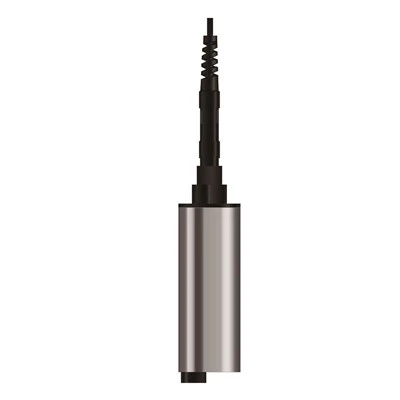
Hey there! As a supplier of optical DO sensors, I often get asked about how these nifty devices measure oxygen in different water depths. It's a super interesting topic, and I'm stoked to share all the details with you.
Let's start with the basics. An Optical Dissolved Oxygen Sensor works on a pretty cool principle. Unlike traditional electrochemical sensors, which can be a bit finicky and need regular maintenance, optical DO sensors use fluorescence to measure the amount of dissolved oxygen in water.
The sensor has a special sensing layer that contains a fluorescent dye. When this dye is exposed to light, it absorbs energy and then emits light at a different wavelength. The presence of oxygen in the water affects the fluorescence of the dye. Oxygen molecules can interact with the excited dye molecules, causing them to lose their energy and return to their ground state without emitting light. This process is called quenching.
The sensor measures the intensity of the fluorescence and uses it to calculate the concentration of dissolved oxygen in the water. The more oxygen there is in the water, the more quenching occurs, and the lower the fluorescence intensity. By measuring the fluorescence intensity and comparing it to a calibration curve, the sensor can accurately determine the dissolved oxygen concentration.
Now, let's talk about how these sensors perform at different water depths. One of the great things about optical DO sensors is that they can work well in a wide range of water depths. However, there are a few factors that can affect their performance.
First of all, the pressure at different water depths can have an impact on the sensor. As you go deeper into the water, the pressure increases. This can cause the sensing layer of the sensor to compress, which might affect the fluorescence properties of the dye. However, most modern optical DO sensors are designed to be pressure-resistant and can handle the increased pressure without significant issues.
Another factor to consider is the amount of light available at different water depths. Light is essential for the operation of the optical DO sensor, as it is used to excite the fluorescent dye. In shallow water, there is usually plenty of sunlight, so the sensor can easily get the light it needs. But as you go deeper, the amount of light decreases. At a certain depth, there might not be enough light for the sensor to function properly.
To overcome this problem, some optical DO sensors are equipped with built-in light sources. These light sources can provide the necessary light for the sensor to operate, even in deep water. Additionally, some sensors are designed to be more sensitive to low light levels, which allows them to work in darker environments.
Temperature is also an important factor when it comes to measuring dissolved oxygen in water. The solubility of oxygen in water decreases as the temperature increases. This means that at higher temperatures, there will be less dissolved oxygen in the water. Optical DO sensors are usually calibrated to account for the temperature effect. They have built-in temperature sensors that measure the water temperature and adjust the oxygen measurement accordingly.
Now, let's take a look at some real-world applications of optical DO sensors at different water depths. In shallow water, such as lakes and ponds, optical DO sensors can be used to monitor the water quality. They can help detect changes in the oxygen levels, which can be an indicator of pollution or other environmental problems. For example, if the oxygen levels suddenly drop, it could mean that there is an excessive amount of organic matter in the water, which is consuming the oxygen.


In deeper water, such as oceans and large rivers, optical DO sensors are used for a variety of purposes. They can be used to study the ocean ecosystem, monitor the health of fish populations, and even detect underwater oil spills. For example, scientists can use optical DO sensors to measure the oxygen levels in different layers of the ocean. This can help them understand how the ocean circulation affects the distribution of oxygen and other nutrients.
As a supplier of Odo Sensor, I can tell you that these sensors are a great investment for anyone who needs to measure dissolved oxygen in water. They are accurate, reliable, and easy to use. Whether you're a scientist, a water treatment plant operator, or a hobbyist who wants to monitor the water quality in your pond, an optical DO sensor can provide you with the information you need.
If you're interested in purchasing an optical DO sensor, I'd love to have a chat with you. We can discuss your specific needs and help you choose the right sensor for your application. Don't hesitate to reach out and start a conversation about procurement. We're here to support you every step of the way.
References
- Atlas of Ocean Oxygen. (n.d.). Retrieved from National Oceanic and Atmospheric Administration website.
- Handbook of Water and Wastewater Treatment Plant Operations. (2012). McGraw-Hill Professional.