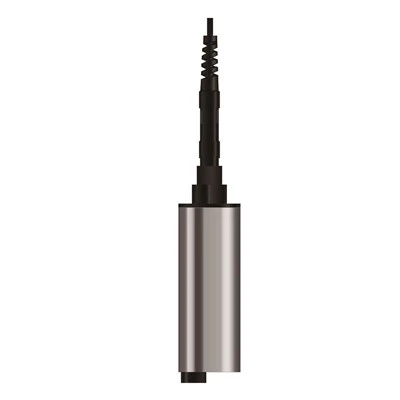
Turbidity is a crucial parameter in assessing water quality, and turbidity sensors play a vital role in accurately measuring it. As a turbidity sensors supplier, we understand the challenges and intricacies involved in handling different particle sizes. In this blog, we will delve into the mechanisms and technologies that enable turbidity sensors to effectively deal with various particle sizes, providing valuable insights for users and potential customers.
Understanding Turbidity and Particle Sizes
Turbidity refers to the cloudiness or haziness of a fluid caused by the presence of suspended particles. These particles can vary significantly in size, from sub - micrometer colloidal particles to larger visible particles. The size of the particles has a profound impact on the measurement of turbidity because different particle sizes scatter light in distinct ways.
Smaller particles, such as colloids with sizes typically in the range of 1 - 1000 nanometers, scatter light according to Rayleigh scattering. In Rayleigh scattering, the intensity of scattered light is inversely proportional to the fourth power of the wavelength of light. This means that smaller particles scatter shorter - wavelength light (e.g., blue light) more effectively than longer - wavelength light (e.g., red light).
Larger particles, on the other hand, follow Mie scattering. Mie scattering occurs when the particle size is comparable to or larger than the wavelength of the incident light. The scattering pattern in Mie scattering is more complex and depends on the particle size, shape, refractive index, and the wavelength of the light.
Technologies in Turbidity Sensors for Handling Different Particle Sizes
1. Multiple Wavelength Detection
Many modern turbidity sensors, like our Water Turbidity Sensor, utilize multiple wavelengths of light to measure turbidity. By using different wavelengths, the sensor can better distinguish between different particle sizes. For example, a sensor might use both blue and infrared light. The blue light is more sensitive to smaller particles due to Rayleigh scattering, while the infrared light is less affected by small particles and can provide information about larger particles. This multi - wavelength approach allows for a more comprehensive measurement of turbidity across a wide range of particle sizes.
2. Angle - Based Detection
Another technique used in turbidity sensors is angle - based detection. Turbidity sensors measure the amount of light scattered at different angles. Smaller particles tend to scatter light more uniformly in all directions, while larger particles scatter light more forward. By measuring the scattered light at multiple angles, such as 90 degrees and forward - scatter angles, the sensor can differentiate between different particle sizes. Our Inline Turbidity Sensor is designed with this angle - based detection technology to provide accurate measurements for various particle sizes in a flowing water system.
3. Dynamic Range Adjustment
Turbidity sensors need to have a wide dynamic range to handle different concentrations and sizes of particles. The dynamic range refers to the range of turbidity values that the sensor can accurately measure. For example, in a water treatment plant, the turbidity can vary from very low levels (almost clear water) to high levels during a storm or when there is a sudden influx of sediment. Our sensors are engineered to automatically adjust their sensitivity based on the turbidity level. When the turbidity is low, the sensor can increase its sensitivity to detect small particles, and when the turbidity is high, it can reduce the sensitivity to avoid saturation.
Challenges in Handling Different Particle Sizes
Despite the advanced technologies, there are still challenges in handling different particle sizes. One of the main challenges is the presence of mixed particle sizes. In real - world water samples, there are often a combination of small and large particles. This can make it difficult to accurately measure the contribution of each particle size to the overall turbidity.
Another challenge is the shape and composition of the particles. Particles can have irregular shapes, and their refractive indices can vary depending on their chemical composition. These factors can affect the scattering pattern of light and make it more challenging to accurately measure turbidity.


Calibration and Validation
To ensure the accuracy of turbidity sensors in handling different particle sizes, proper calibration and validation are essential. Calibration involves comparing the sensor's output to a known turbidity standard. These standards are typically prepared using a specific type of particle, such as formazin, with a well - defined size and concentration.
Validation, on the other hand, involves testing the sensor in real - world conditions with different particle sizes. Our company provides comprehensive calibration and validation services to ensure that our turbidity sensors perform accurately in various applications.
Applications and the Importance of Handling Different Particle Sizes
Turbidity sensors are used in a wide range of applications, including water treatment, environmental monitoring, and industrial processes.
In water treatment plants, accurate measurement of turbidity is crucial for ensuring the quality of the treated water. Different particle sizes can have different impacts on the water treatment process. For example, small colloidal particles can pass through filters more easily and may require additional treatment steps, such as coagulation and flocculation, to remove them. By accurately measuring the turbidity of different particle sizes, water treatment operators can optimize the treatment process and ensure that the final water quality meets the required standards.
In environmental monitoring, turbidity sensors are used to assess the health of rivers, lakes, and oceans. Changes in turbidity can indicate the presence of pollutants, sediment runoff, or algal blooms. Different particle sizes can provide clues about the source of the turbidity. For example, large particles may be due to soil erosion, while small particles may be associated with industrial waste or biological activity.
In industrial processes, such as food and beverage production, turbidity sensors are used to monitor the clarity of liquids. Different particle sizes can affect the quality and appearance of the final product. By accurately measuring turbidity, manufacturers can ensure that their products meet the desired quality standards.
Contact Us for Turbidity Sensor Solutions
As a leading turbidity sensors supplier, we are committed to providing high - quality sensors that can effectively handle different particle sizes. Our sensors are designed with the latest technologies to ensure accurate and reliable measurements in various applications.
If you are interested in purchasing turbidity sensors or have any questions about our products, please feel free to contact us. We have a team of experts who can provide you with detailed information and technical support. Whether you need a Water Turbidity Sensor for a small - scale water testing project or an Inline Turbidity Sensor for a large - scale industrial application, we can offer you the right solution.
References
- American Public Health Association. "Standard Methods for the Examination of Water and Wastewater." 23rd Edition.
- ISO 7027:2019. "Water quality - Determination of turbidity."
- D. A. Bohren and C. F. Huffman. "Absorption and Scattering of Light by Small Particles." John Wiley & Sons, 1983.