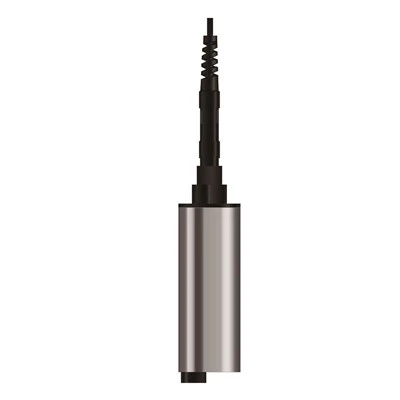
Hey there! I'm a supplier of COD sensors, and today I'm gonna talk about how these sensors work when there's chlorine in the mix. Chemical Oxygen Demand (COD) is a crucial parameter for measuring the amount of oxygen required to chemically oxidize organic and inorganic substances in water. It's a key indicator of water quality, used in everything from wastewater treatment plants to environmental monitoring.
But what happens when chlorine is present? Chlorine is a common disinfectant used in water treatment, and it can have a significant impact on COD measurements. Let's dive into the details of how COD sensors handle this situation.
Understanding COD Sensors
Before we get into the effect of chlorine, let's quickly go over how COD sensors work. There are different types of COD sensors, but the most common ones are based on either chemical or optical methods.
Chemical-based COD sensors typically involve adding a strong oxidizing agent to the water sample and measuring the amount of oxygen consumed during the oxidation process. This method is accurate but can be time-consuming and requires the use of chemicals, which can be hazardous.
On the other hand, optical COD sensors, like the UV254 COD, use ultraviolet light at a wavelength of 254 nm to measure the absorbance of organic compounds in the water. Organic compounds absorb UV light, and the amount of absorption is proportional to the concentration of organic matter. This method is fast, non-invasive, and doesn't require the use of chemicals.
The Impact of Chlorine on COD Measurements
Chlorine is a powerful oxidizing agent, and it can react with both organic and inorganic substances in the water. When chlorine is present in a water sample, it can interfere with the COD measurement in several ways.
First, chlorine can oxidize some of the organic compounds in the water before the COD sensor has a chance to measure them. This can lead to a lower COD reading than the actual value, as some of the organic matter has already been oxidized by the chlorine.
Second, chlorine can also react with the oxidizing agent used in chemical-based COD sensors, reducing its effectiveness. This can result in an inaccurate COD measurement, as the oxidizing agent may not be able to fully oxidize all the organic matter in the water.
Finally, chlorine can cause interference in optical COD sensors. Chlorine can absorb UV light at the same wavelength as organic compounds, leading to an overestimation of the COD value. This is because the sensor measures the total absorbance of the water sample, and the absorbance due to chlorine is included in the measurement.
How COD Sensors Deal with Chlorine
So, how do COD sensors overcome the challenges posed by chlorine? Well, different sensors use different techniques to minimize the impact of chlorine on the COD measurement.
Chemical-Based COD Sensors
Chemical-based COD sensors can use a variety of methods to deal with chlorine. One common approach is to add a reducing agent to the water sample before the COD measurement. The reducing agent reacts with the chlorine, neutralizing its oxidizing effect and preventing it from interfering with the COD measurement.
Another method is to use a masking agent. Masking agents are chemicals that bind to the chlorine, preventing it from reacting with the oxidizing agent or the organic compounds in the water. This helps to ensure that the COD measurement is accurate.
Optical COD Sensors
Optical COD sensors, such as the UV254 COD, use a different approach to deal with chlorine. These sensors are designed to measure the absorbance of organic compounds at a specific wavelength, and they can be calibrated to compensate for the absorbance due to chlorine.
One way to do this is to use a reference wavelength. The sensor measures the absorbance of the water sample at both the 254 nm wavelength and a reference wavelength where chlorine does not absorb light. By comparing the absorbance at these two wavelengths, the sensor can calculate the absorbance due to organic compounds only, eliminating the interference from chlorine.


Another method is to use a mathematical algorithm to correct the COD measurement for the presence of chlorine. The algorithm takes into account the known properties of chlorine and the absorbance spectrum of the water sample to calculate the true COD value.
Real-World Applications
The ability of COD sensors to work in the presence of chlorine is crucial in many real-world applications. For example, in wastewater treatment plants, chlorine is often used to disinfect the treated water before it is discharged into the environment. COD sensors are used to monitor the quality of the treated water, and it's important that they can provide accurate measurements even in the presence of chlorine.
In industrial settings, such as chemical plants and food processing facilities, chlorine is also commonly used for disinfection. COD sensors are used to monitor the quality of the wastewater generated by these industries, and they need to be able to work accurately in the presence of chlorine to ensure that the wastewater meets the environmental standards.
Choosing the Right COD Sensor
When choosing a COD sensor for a specific application, it's important to consider the presence of chlorine and the type of sensor that is best suited to handle it. Chemical-based COD sensors are generally more accurate but can be more expensive and require more maintenance. Optical COD sensors, on the other hand, are faster, non-invasive, and require less maintenance, but they may be less accurate in some situations.
If you're dealing with a water sample that contains a high concentration of chlorine, a chemical-based COD sensor with a reducing agent or a masking agent may be the best choice. If the chlorine concentration is relatively low, an optical COD sensor with a calibration or correction algorithm may be sufficient.
Conclusion
In conclusion, COD sensors play a vital role in measuring the quality of water, even in the presence of chlorine. By understanding how chlorine can interfere with COD measurements and how different sensors deal with this challenge, you can choose the right sensor for your application and ensure accurate and reliable results.
If you're in the market for a COD sensor, we offer a wide range of Chemical Oxygen Demand Sensor and Industrial Effluent COD Sensor that are designed to work effectively in various environments, including those with chlorine. We're here to help you find the perfect solution for your needs. If you have any questions or want to discuss your requirements, don't hesitate to get in touch. We look forward to working with you!
References
- APHA, AWWA, WEF. Standard Methods for the Examination of Water and Wastewater. 23rd ed. American Public Health Association, American Water Works Association, Water Environment Federation, 2017.
- Radojevic, M., Bashkin, S. A. Environmental Analysis: A Practical Guide to Sampling and Analytical Methods. CRC Press, 1999.